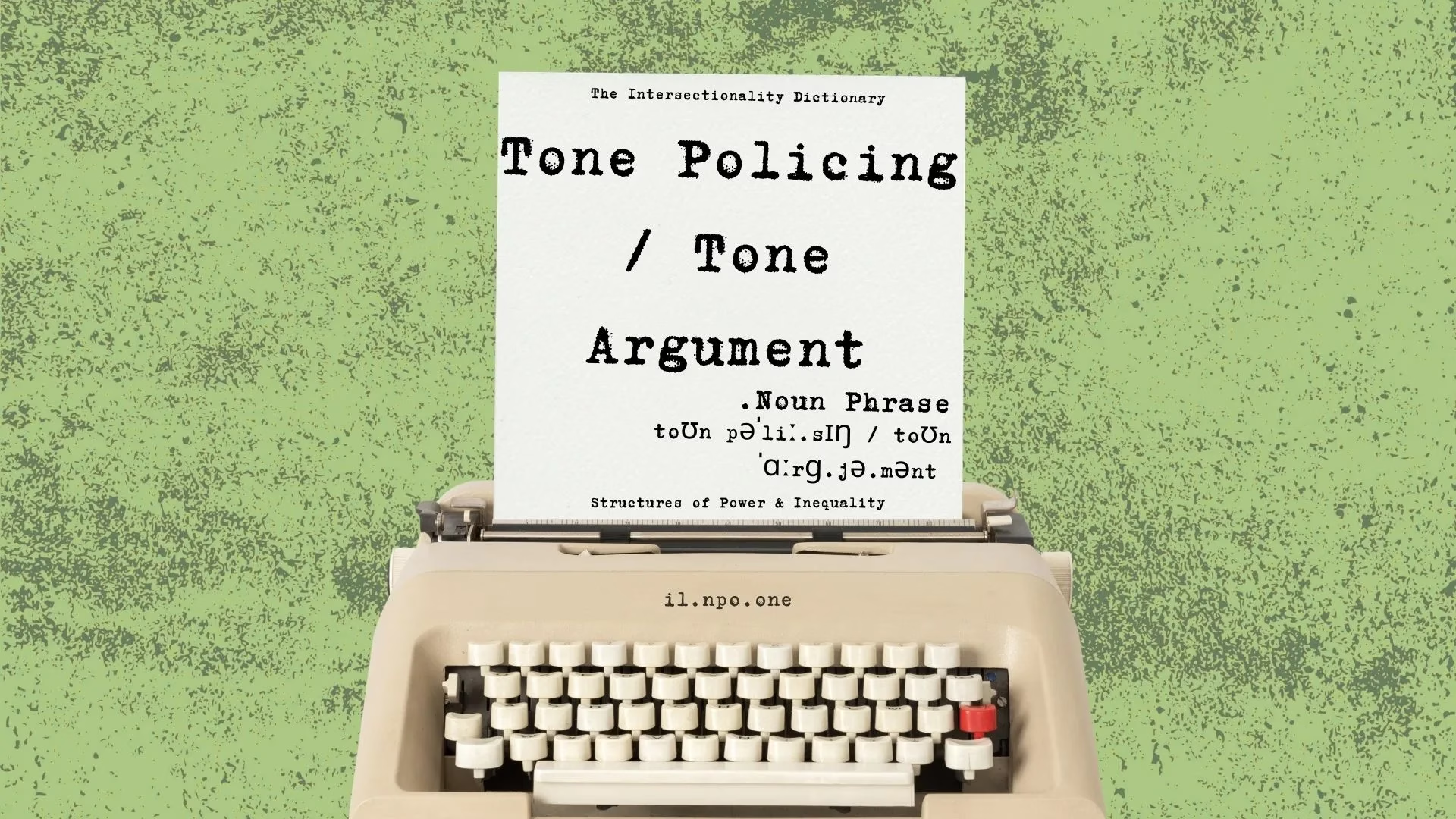
The act of dismissing or reducing someone’s argument based on the way it is expressed, the attitude, the tone used, or the emotions expressed can be understood as Tone Policing or Tone Argument (Geek Feminism Wiki, 2016; Jeufo, 2020; Prescod-Weinstein, 2015; University of Wisconsin–Madison, 2023). It is an ad hominem argument that does not take into consideration the essence of the content expressed rather than the way that it is expressed. It is highly used in conflicts about social justice, especially when non-privileged groups express their frustration. This is basically a try to silence crucial arguments and voices that are not always able to be expressed, and further reinforces power structures and imbalances (Jeufo, 2020; Prescod-Weinstein, 2015).
Framing & Perspectives
Tone policing serves as an irrational standard of “appropriate” or “polite” communication that usually aligns with normative social norms, typically white, male, neurotypical, and middle-class expectations (Valerio, 2020). Under these norms, emotional expression and emotions in general are rejected as irrational, improper, or undisciplined, especially when coming from people with lower social power. For example, women, especially women of color, are frequently told to “calm down” or “be more respectful” when they express concerns about discrimination (Prescod-Weinstein, 2015; Harris, 2019). These reactions reflect gendered and racialized reflections about who is “allowed” to express emotion and who is expected to stay controlled . McKenzie and Bishop (2019) demonstrated how tone policing limits meaningful student expression in educational contexts. Their study about student voice initiatives showed that students, especially the ones who criticized injustice, were expected to stay calm and restrict the authenticity of their contribution to the class in the name of respect or compliance with the institutional norms. Emotional expressions of anger or frustration were considered a threat or impropriety, even as an expression of experienced oppression or marginalization (McKenzie & Bishop, 2019). Students were forced to express themselves in a “civil” way, no matter how they felt, because of possible punishments (McKenzie & Bishop, 2019). Neurodivergent individuals are disproportionately affected by tone policing because the “norm” is created based exclusively on neuronormativity, and such individuals are dismissed as rude or aggressive, as their communication might not match the conventional expectations (Valerio, 2020).
Relevance
Tone policing appears in ongoing conversations across activism, politics, education, and everyday social media interactions. It is often used covered in benevolent advice like “you’d make a better point if you weren’t so angry” or “try to be more professional” (Harris, 2019; Roman, 2023; University of Wisconsin–Madison, 2023). Those tactics make the emotional expression of people targeted by marginalization the problem, rather than the injustice they are responding to (Roman, 2023). Social media platforms amplify this phenomenon, especially for women and people of color. Prescod-Weinstein (2015) and PureWow Editors (2023) note that when individuals from these groups speak up about inequality on social media, they are often accused of being too harsh, even when their tone is relatively moderate. This silencing tactic is part of a broader pattern in which dominant groups control not just what can be said, but how it must be said to be taken into consideration (Prescod-Weinstein, 2015; Valerio, 2020; Harris, 2019). Tolerating a harmful or abusive tone is not the same as acknowledging and combating tone policing. It means recognizing that emotional expression is powerful and entirely appropriate in this context, especially when it comes from people who respond to oppression (University of Wisconsin–Madison, 2023). Discussions of tone policing must include its inclusive language resources, making staff and students think critically about how requests for civility can disproportionately silence very specific voices (University of Wisconsin–Madison, 2023).
Keywords: Structures of power & inequality, power dynamics
Connected terms: Microaggressions, Microinterventions, Ethnocentrism, Linguistic Imperialism, White Defensiveness, White Fragility, White Guilt, White Silence
References
Geek Feminism Wiki. (2016). Tone argument. Geek Feminism. https://geekfeminism.fandom.com/wiki/Tone_argument
Harris, B. J. (2019, October 24). Unpacking the conversations that matter: “If you weren’t so angry, people would listen”—and the problem with tone policing. The Inclusion Solution. https://theinclusionsolution.me/unpacking-the-conversations-that-matter-if-you-werent-so-angry-people-would-listen-and-the-problem-with-tone-policing/
Jeufo, C. (2020, May 13). Tone policing: The ultimate deflection tactic used by the privileged. Medium. https://medium.com/@cyrille.jeufo/tone-policing-the-ultimate-deflection-tactic-used-by-the-privileged-bc7d764be511
McKenzie, K. B., & Bishop, P. A. (2019). Navigating the danger zone: Tone policing and the bounding of civility in the practice of student voice. Middle Grades Review, 5(2), Article 3. https://www.researchgate.net/publication/334212535
Prescod-Weinstein, C. (2015, May 13). What’s the harm in tone policing? Medium. https://medium.com/@chanda/what-s-the-harm-in-tone-policing-e933d90af247
PureWow Editors. (2023, March 1). What is tone policing? PureWow. https://www.purewow.com/wellness/what-is-tone-policing
Roman, T. R. (2023, February 19). Tone policing. Taylor Rae Roman. https://taylorraeroman.com/newsletter/tone-policing
University of Wisconsin–Madison. (2023, December 7). Inclusive language series: Tone policing. University Housing News. https://www.housing.wisc.edu/2023/12/inclusive-language-series-tone-policing-2/
Valerio, N. (2020, July 13). Respect versus reverence. Medium.https://medium.com/neurodiversified/respect-versus-reverence-49d05f110a2a