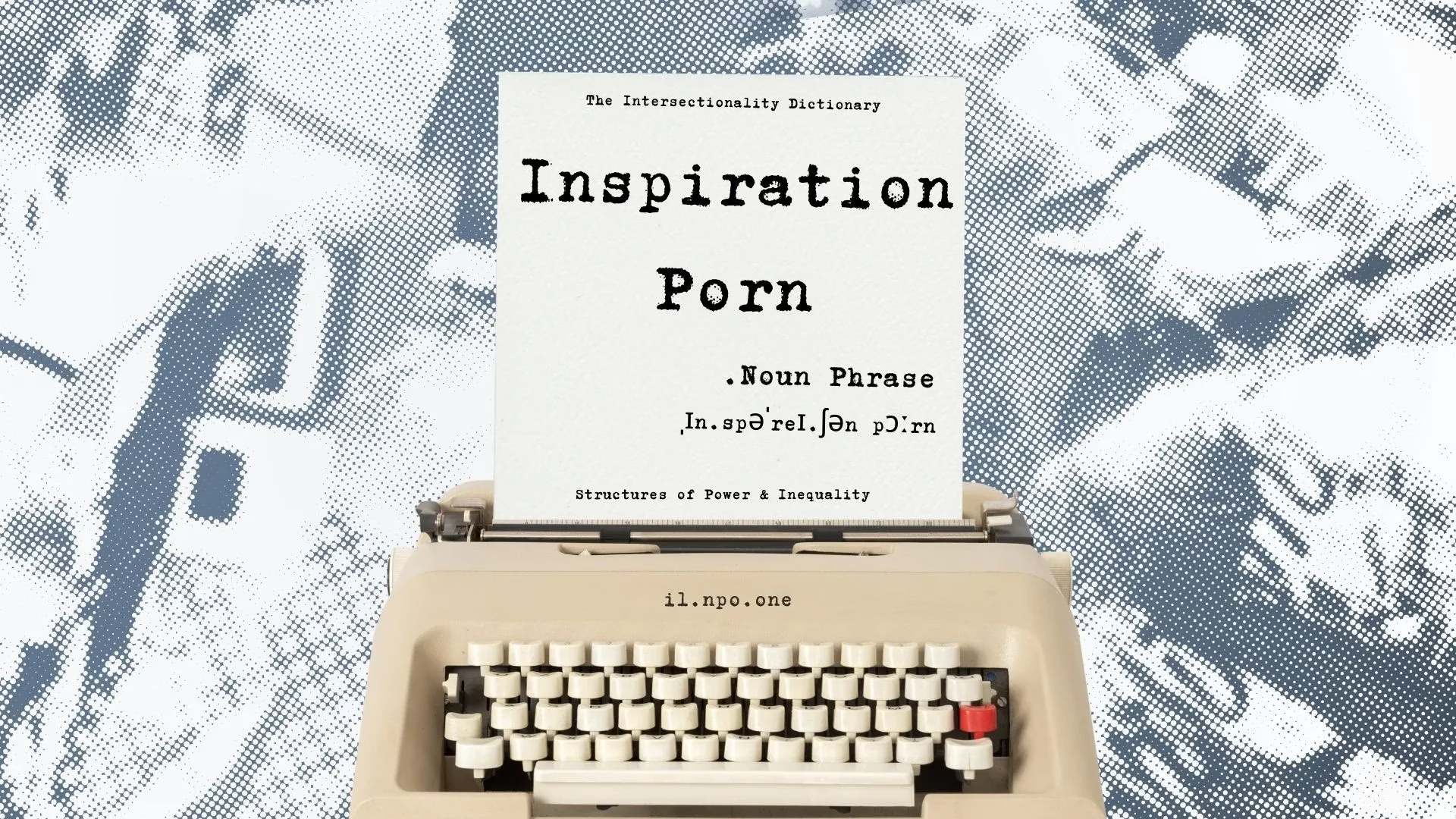
Inspiration porn is the representation of disability as inspiration, by objectifying the person with a disability for the benefit of the abled group. In an attempt to pass a positive message, it is essentially benevolent racism and discrimination against disabled people that is performed — the so-called ableism. It is problematic because disabled people don’t exist to inspire others, and simply living with a disability is not something that should inspire anyone. It is inspiring when someone, disabled or not, does something amazing, but it is not amazing or inspiring if a disabled person just continues to exist while having a disability (Zayid, 2017). Like mainstream pornography, inspiration porn provides superficial pleasure and gratification for the viewer while objectifying, even harming, the subjects being looked at (Pulrang, 2019). With numerous memes or pictures circulating the internet that include “strong,” “powerful” messages written next to images of people using prosthetic limbs or wheelchairs, it is implied that when a person with those perceived barriers can achieve something, a person without a disability must achieve at least as much or more (Qicreative, 2022). However, the viewer remains unaware of the person’s actual achievements or even personality—the only element being communicated is their image, their appearance. It’s practically using those disabled people as props to carry a message, rather than respecting their individual humanity (Qicreative, 2022). This is where the objectification stems from: the personality and/or achievements of the portrayed person are not recognized. It’s only their depiction, as part of a medical model or personal tragedy framing of disability, that makes them a tool of inspiration. When people feel that things are not so bad for them compared to others, it helps them put their worries into perspective (TED, 2014).
Framing & Perspectives
The term was coined by and is associated with disability activist Stella Young (TED, 2014). She explains how disabled people serve as inspiration just by existing, and how harmful it is when one group is objectified for another’s relief or benefit. It is objectifying someone with a disability to make someone without a disability feel better about themselves (Nichols, 2018). As Young puts it, “However bad my life is, it could be worse—it could be that person’s” (TED, 2014). When people find a disabled person inspiring, they may mean it as a compliment, but minimizing every other aspect of one’s existence to only their disability is discriminatory. It is not true that disability itself makes you exceptional—there is nothing inherently to be admired (TED, 2014). Due to society’s lower expectations, people with disabilities are often given awards or special recognition for simply existing or doing things that are not out of the ordinary for them (United Way of South Central Michigan, 2022).
Relevance
Focusing on individual perseverance and the idea of one person who is “strong” enough to “overcome” the barriers of disability harms both disabled and non-disabled people. It shifts society’s attention away from the existing systemic barriers that undermine the everyday lives of disabled people (United Way of South Central Michigan, 2022). It promotes a distorted message of individual responsibility and ambition as being required by the disabled person to navigate a non-inclusive society built for the able-bodied. The importance of creating accessible public spaces, inclusive education, and equal work opportunities is often overlooked. This shifts the additional and disproportionate burden onto disabled people to adapt and “try harder,” rather than challenging society to become more inclusive and actively equitable (United Way of South Central Michigan, 2022). The majority of media portrayals and uses of disability in this inspirational context share one or more of the following qualities:
• Sentimentality and/or pity
• An uplifting moral message, primarily aimed at non-disabled viewers
• Disabled people are anonymously objectified, even when they are named (Pulrang, 2019).
It is a rather cheap message of “pride” and “inspiration” rooted in the harmful and stereotypical belief that disabled people are expected to be unsuccessful, unhappy, and dependent (Qicreative, 2022). If we all were to keep a main takeaway from this entry, I would suggest the following: If the only reason the story is being broadcast is because of the disability, then the story and recognition are inspiration porn (Kent State University, 2022).
Keywords: Discrimination, Ableism
Connected terms: Ableism, Sexism, Internalized Sexism, Reproductive Rights, Bodily Autonomy, Body image, Kink
References
Accessibility.com. (2022, January 26). What is inspiration porn? https://www.accessibility.com/blog/what-is-inspiration-porn
Grue, J. (2016). The problem with inspiration porn: A tentative definition and a provisional critique. Disability & Society, 31(6), 838–849. https://doi.org/10.1080/09687599.2016.1191474
Kent State University. (2022, April). Bias buster: The danger of inspiration porn. https://www.kent.edu/equalaccess/news/bias-buster-danger-inspiration-porn
Nichols, M. (2018, October 17). What is inspiration porn? https://www.meriahnichols.com/what-is-inspiration-porn/
Pulrang, A. (2019, November 29). How to avoid inspiration porn. Forbes. https://www.forbes.com/sites/andrewpulrang/2019/11/29/how-to-avoid-inspiration-porn/
Qicreative. (2022, April 18). What is inspiration porn? https://www.qicreative.com/blog/what-is-inspiration-porn
TED. (2014, June 9). I’m not your inspiration, thank you very much | Stella Young [Video]. YouTube. https://www.youtube.com/watch?v=8K9Gg164Bsw
United Way of South Central Michigan. (2022, August 5). Day 5: Disability inspiration (‘Inspiration Porn’). https://unitedforscmi.org/day-5-objectification/
Zayid, M. (2017, July 17). On inspiration porn. HuffPost. https://www.huffpost.com/entry/on-inspiration-porn_b_596cedd0e4b05561da5a595e