Framing & Perspectives
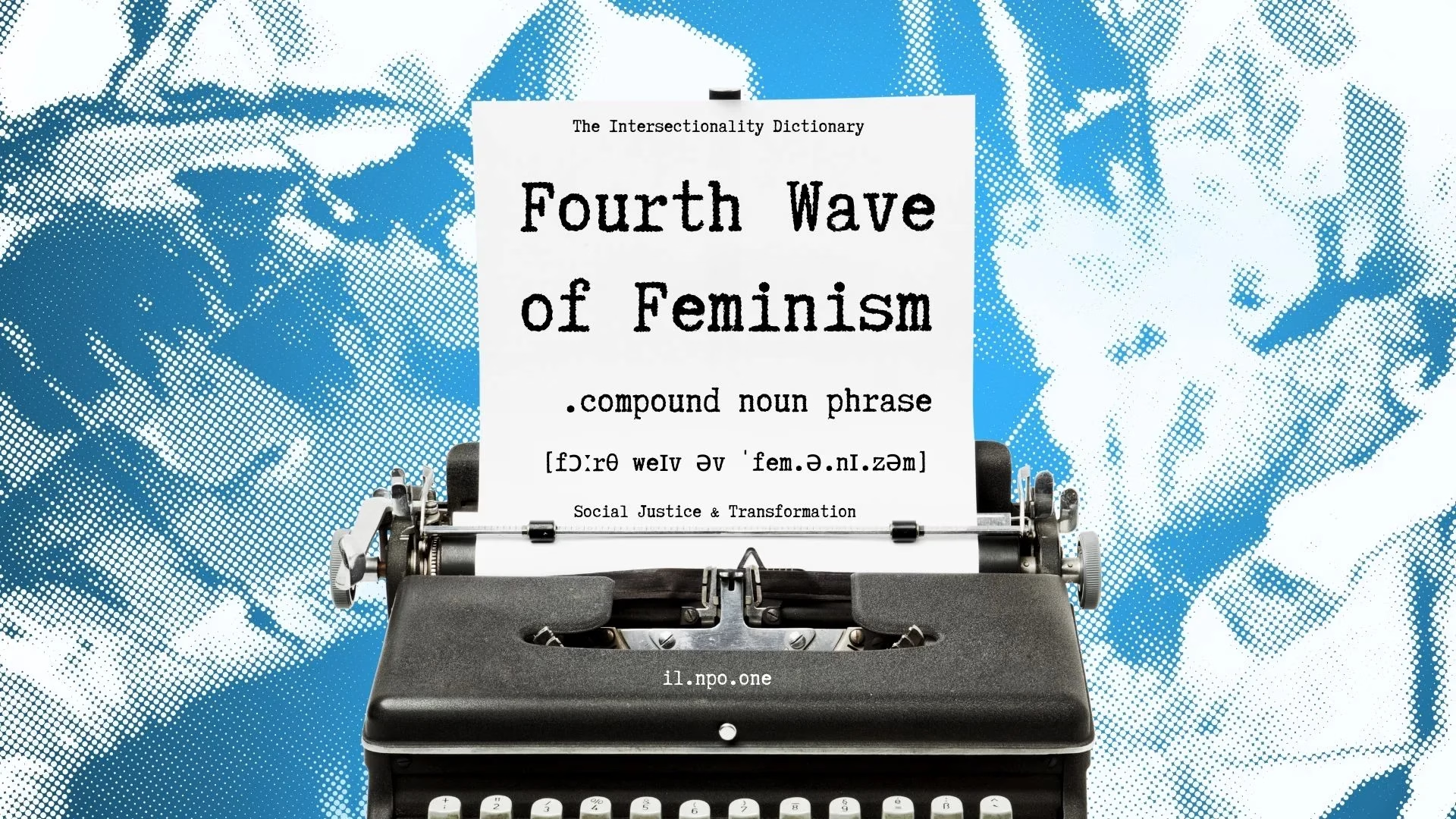
The fourth wave of feminism began around 2012 and continues to the present day. This wave builds on the achievements of previous waves while addressing new and emerging issues faced by women in the 21st century (Munro, 2013).
Characterized by its use of digital and social media, the fourth wave raises awareness and mobilizes around feminist issues. It adopts an intersectional approach, emphasizing how different forms of oppression, such as racism, classism, and ableism, interact and compound (Crenshaw, 1989).
Relevance
Fourth-wave feminists, thus far, was bein focusing on issues such as sexual harassment, rape culture, and the gender pay gap amongst others. One of the most prominent examples of this wave is the “Me Too” movement, founded by Tarana Burke in 2006. The movement aims to end sexual violence, harassment, and assault, gaining worldwide attention in 2017 when people used the hashtag “Me Too” to share their stories on social media (Burke, 2017). This led to many powerful men in various industries facing condemnation for their actions. The movement seeks to empower survivors and promote a cultural shift towards empathy, healing, and accountability for perpetrators of sexual violence, advocating for legislative reforms and public awareness (Gill & Orgad, 2018).
Since it’s still in place, this fourth wave is having to incorporate ongoing issues. With the emergency of the new far right movements, at a global scale, we can highlight, as an example, the returning of issues that we thought were already conquered, notably in the areas of reproductive rights, trans people rights, social and economical rights, etc.
Keywords: Digital and Social Media, Feminist Issues, Intersectional Approach, Sexual Harassment, Rape Culture, Gender Pay Gap, Raise of Far Right Movements
Connected terms: Classical Feminisms, First Wave Feminism, Second Wave Feminism, Third Wave of Feminism, Waves of Classical Feminism, Benevolent Sexism, Hostile Sexism, Internalized Sexism, Reproductive Rights, Acronym “LGBTQIAPN+”
References
Burke, T. (2017). Me Too movement. Retrieved from https://metoomvmt.org
Crenshaw, K. (1989). Demarginalizing the intersection of race and sex: A black feminist critique of antidiscrimination doctrine, feminist theory, and antiracist politics. University of Chicago Legal Forum, 1989(1), Article 8.
Gill, R., & Orgad, S. (2018). The shifting terrain of sex and power: From the ‘sexualization of culture’ to #MeToo. Sexualities, 21(8), 1313-1324.
Munro, E. (2013). Feminism: A fourth wave? Political Insight, 4(2), 22-25.