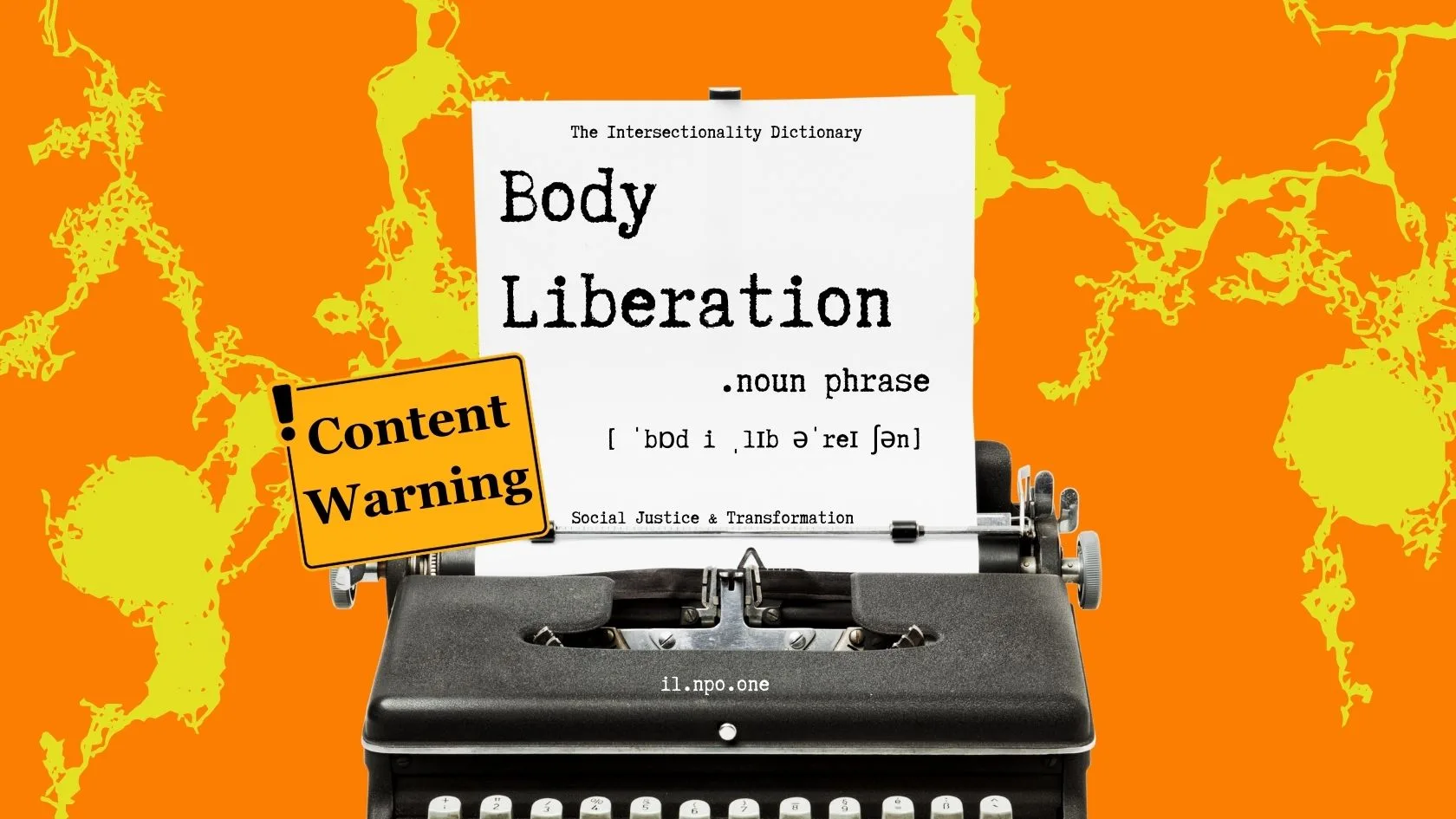
Influenced by Black feminism, disability justice, and queer theory, Body Liberation frames the body as a site of resistance against oppressive societal narratives. Not only to have compassion for our bodies, but more importantly, to dismantle the systems that harm them and collectively free ourselves from body hierarchies rather than focusing on individual responsibility (King, 2023; Binder, 2023). While reclaiming the roots of the radical and from the mainstream co-opted Body Positivity movements, Body Liberation also responds to the dismissed realities within the concept of Body Neutrality of people whose bodies are constantly judged, policed, or devalued by society. The following text uses general illustrations of whitewashed, able-bodied and normative narratives around bodies without providing detailed descriptions of them.
Framing & Perspectives
The Body Positivity movements began in the 1960s as a response to fat-shaming and discrimination, led by Black and LGBTQ+ feminists (Mehdi & Frazier, 2021). It sought to dismantle the relationship between weight and personal worth, nurturing the idea that everyone deserves respect and fair treatment regardless of physical appearance. The movement challenges societal and media-driven beauty ideals by advocating awareness and developing a more compassionate relationship with one’s body (Heider, Spruyt, & De Houwer, 2018). While in the 1970s to 1990s, fat activism gained more and more visibility and advocated for equal rights for fat people in all areas of life, claiming the diet industry as a scam that excludes and hurts most bodies, it was not yet called Body Positivity (BBC Bitesize, n.d.). With the rise of online communities, anonymity has increased the frequency of body shaming. At the same time, it introduced more ways of self-expression and connecting through hashtags and Facebook groups. People were able to choose to represent themselves and use it as a tool of political statement of unapologetic body acceptance. However, the Body Positivity movement has been co-opted by the mainstream, focusing on bodies that already receive societal acceptance (BBC Bitesize, n.d.; King, 2003). That sort of feel-good, often whitewashed messages of self-love that are centered again, in appearance and an individual mindset over systemic change and promote normative appreciation of White, cisgendered, abled-bodies that are anyway favored by mainstream society (King, 2023). Loving your body, whatever system is constantly violating it, in the end, puts another demand on individuals rather than addressing societal structures that create shame. The movement’s focus on appearance tends to overshadow the importance of physical and mental health (Sutley, n.d.). Media portrayals of Body Positivity can contradict the general idea by conveying mixed messages of self-acceptance that promote weight loss (Fuller, 2022; BBC Bitesize, n.d.).
As a response, the Body Neutrality concept gained popularity around 2015, promoted by bloggers, celebrities, and advocates of intuitive eating (The Emily Program, 2021). The philosophy behind this is that bodies are neither inherently good nor bad and self-worth should not be based on physical appearance, but rather on the body’s functions and capabilities, since most physical attributes are beyond our control (Cleveland Clinic, 2022). It promotes caring for one’s body even if one does not always feel positive about it (Fuller, 2022). For those who have struggled with severe body dissatisfaction or trauma, Body Neutrality can be more accessible. While this concept acknowledges the societal fixation on appearance connected to self-worth, it still dismisses the lived experiences of people whose bodies are constantly judged, policed, or devalued by society. Meaning that the idea of “not thinking about your body” can be a very privileged detachment from societal appearance pressure and has the potential to silence or avoid considering experiencing pain, trauma, and identities connected to the body. Like body positivity, Body Neutrality stresses an individual coping mechanism rather than a collective movement to dismantle and liberate all bodies from oppressive systems (King, 2023).
This is where Body Liberationcomes into place. It aims to reclaim the radical political roots of the Body Positivity Movement (King, 2023; Ashline, 2020). Instead of individual responsibility to feel good in one’s body, Body Liberation acknowledges that individual healing is only possible with a collective liberation and addresses how White supremacy, patriarchy, fatphobia, ableism, and capitalism maintain body hierarchies and harms especially those in larger, racialized, disabled, or trans bodies (Kind, 2023; Binder, 2023).
Relevance
Body Positivity, Body Neutrality, and Body Liberation have grown in recognition over time. Starting as radical acts of resistance against violence and exclusive beauty standards, many of these movements have been co-opted and whitewashed by mainstream and capitalist interests, and have become more exclusive as their visibility has increased (e.g., BBC Bitesize, n.d.). Again, the people most affected by body-based oppression have frequently been overlooked in favor of thin, White, cis, able-bodied narratives. Body Liberation is a collective healing effort rather than merely self-love or being comfortable in our skin (King, 2023; Binder, 2023). To truly begin to love and accept the bodies we reside in, we must free them from structures that exploit our insecurities and marginalize the majority of experiences. The liberation movement encourages rage, grief, and resistance rather than only acceptance and calm detachment. This includes dismantling how power works and how body hierarchies are constructed and controlled in favor of White supremacy, patriarchy, and capitalism (King, 2023). Body Liberation might look different for each individual and community. However, the key is to always consider: Whose liberation is included or excluded?
“Body liberation isn’t about liking how you look. It’s about the freedom to exist in your body without fear, shame, or oppression and ensuring that freedom is available to all bodies.” (Crissy King, 2023)
Keywords: Body Image, Societal Standards, Fat-Shaming, Body Appearances, Affirmation, Acceptance, Sexism, Body Dissatisfaction
Connected terms: Sexism, Reproductive Rights, Body Image, Bodily Autonomy, Fatphobia, Queer, Ableism, Gendered Ageism, Internalized Sexism, Acronym “LGBTQIANPN+”
References
Ashline, Lindley (Sep 2020). What’s the Difference Between Body Positivity and Body Liberation? Project HEAL. Retrieved 28.07.2025 from What’s the Difference Between Body Positivity and Body Liberation? – Project HEAL
BBC Bitesize (n.d.). From New York to Instagram: The history of the body positivity movement. Retrieved July 28, 2025 from What is the history of body positivity? – BBC Bitesize
Binder, K. (2023). Body Normativity and the Hyper (in) Visibility of Abject Bodies living with Oppression in the Body Liberation Movement. https://gupea.ub.gu.se/handle/2077/75972
Cleveland Clinic. (2022). What’s the difference between body positivity and body neutrality? Retrieved June 6, 2024, from https://health.clevelandclinic.org/body-positivity-vs-body-neutrality
Fuller, K. (2022). Body positivity vs body neutrality. Verywell Mind. Retrieved June 6, 2024, from https://www.verywellmind.com/body-positivity-vs-body-neutrality-5184565
Heider, N., Spruyt, A., & De Houwer, J. (2018). Body dissatisfaction revisited: On the importance of implicit beliefs about actual and ideal body image. Psychologica Belgica, 57(4), 158-173. https://doi.org/10.5334/pb.362
Mehdi, N., & Frazier, C. (2021). Forgetting fatness: The violent co-optation of the body positivity movement. Debates in Aesthetics, 16(1), 13-28.
Psychology Today. (n.d.). Body positivity. Psychology Today. Retrieved June 6, 2024, from https://www.psychologytoday.com/us/basics/body-positivity
Sutley, P. (n.d.). The line between body positivity and glorifying obesity. An Ecological Approach to Obesity and Eating Disorders.
The Emily Program. (2021). Understanding body positivity, body acceptance, and body neutrality. Retrieved June 6, 2024, from https://emilyprogram.com/blog/understanding-body-positivity-body-acceptance-and-body-neutrality/