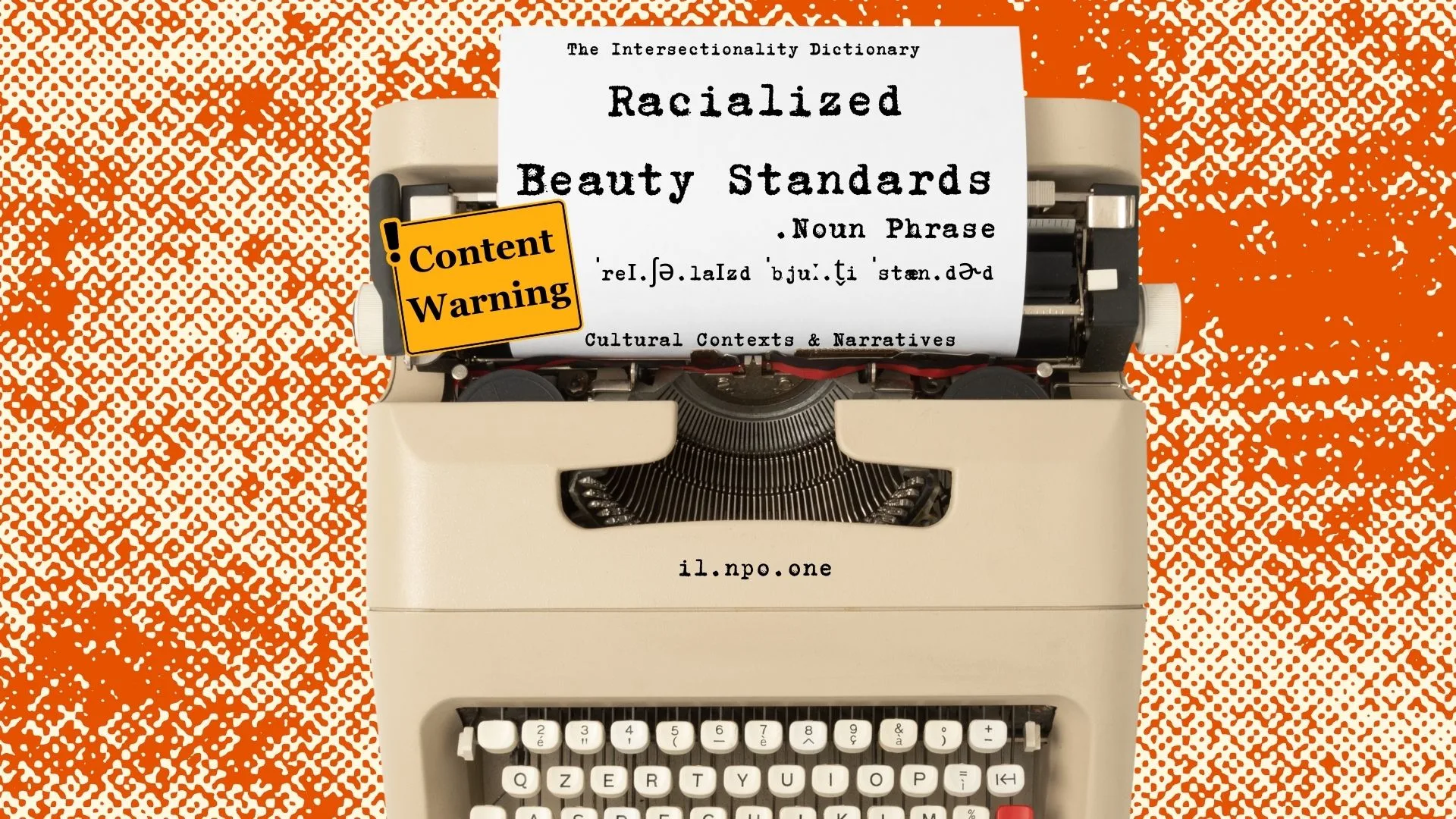
Racialized beauty standards are rooted in racial hierarchies that shape mainstream societal perception of beauty. While diminishing those belonging to non-white ethnic groupings, mostly Eurocentric traits are favored (Mohamed et al., 2021). These norms are rooted in historical and colonial legacies, social structures, and mainstream media representations. Racial beauty standards have a strong social and psychological impact on people who do not fit these white-mainstream beauty standards (Zhang, 2012). The following text portrays the processes of how these standards are maintained through social structures. Additionally, it contains some examples of racial stereotypes, discrimination, sexual racism, and body image concerns that are not detailed.
Framing & Perspectives
Historically, racialized beauty standards have their origins in colonial histories and were perpetuated by the media. Fair skin has been associated with luxury and higher social status (Zahng, 2012). For example, in Chinese history, light complexion was linked with aristocracy. Furthermore, Whiteness has influenced Western cultures’ concepts of beauty, placing a higher value on lighter skin color, Eurocentric face characteristics, and slimmer body types (Chen, 2021).
Racialized beauty standards overlap with gendered racism. People of color, especially women and queer people, often experience multiple discrimination based on both their race and gender (Essed, 1991; Silvestrini, 2019). Black and Latino people have been historically hypersexualized and fetishized in the media, including notions of immorality (Collins, 1990; Rosenthal & Lobel, 2018; Silvestrini, 2019). Ethnosexual stereotyping includes the policing and control of sexuality and race (Nagel, 2000; Silvestrini, 2019), leading to the fetishization of BIPOC people, and perpetuates White supremacist colonial ideology (Holmes, 2016; Silvestrini, 2019). Additionally, racial prejudices can negatively impact a person’s self-esteem and influence their romantic and sexual experiences (Silvestrini, 2019). Sexual racism plays a key role in determining perceived desirability. Asian men tend to be perceived as less masculine, and Black women are subject to negative stereotypes that minimize their beauty (Han, 2006; Wilkins et al., 2011; Silvestrini, 2019). Lighter-skinned members of ethnic groups are often preferred in social and professional settings. Colorism, prejudice based on one’s skin tone, intensifies these issues (Silvestrini, 2019).
Relevance
Unrealistic ideals and Eurocentric beauty standards are internalized and more widespread by social media platforms such as Instagram and TikTok (Mohamed et al., 2021). Effects that offer skin-lightening or smoothing effects that promote lighter complexions reinforce Eurocentric beauty ideals (Ryan-Mosley, 2021). Because of this, many young people of all ethnicities could feel underrepresented and excluded in mainstream ideals of beauty (Mohamed et al., 2021). Sexual racism is still a significant problem in online dating, where racial biases impact romantic preferences and desirability (Silvestrini, 2019). Black and Asian individuals, especially women and gay men, report experiencing rejection based on their ethnicity. This can deepen (internalized) racism, cause low self-esteem, and social isolation (Silvestrini, 2019).
The persistence of racially idealized beauty standards shows how colonialism, White supremacy, and patriarchy still shape how people view themselves and interact with others. The cultural narratives, media portrayals, and structural inequalities that uphold Eurocentric standards must be critically examined to address these problems.
Keywords: Sexual Racism, Racial Stereotypes, Colorism, Eurocentric Beauty Standards, Media Representation, Gendered Racism
Connected terms: Microaggressions, Microinterventions, Ableism, Sexism, Internalized Sexism, Tone Policing, Body Liberation, Bodily Autonomy, Stereotype Threat, Representation
References
Chen, M. (2021). The racializing of beauty: The rise of Western beauty norms and self-esteem among Asian women. NU Writing, 12. https://openjournals.neu.edu/nuwriting/home/article/view/217/167
Collins, P. H. (1990). Black feminist thought: Knowledge, consciousness, and the politics of empowerment. Routledge
Cwynar-Horta, J. (2016). The commodification of the body positive movement on Instagram. Stream: Interdisciplinary Journal of Communication, 8(2), 36–56. https://journals.sfu.ca/stream/index.php/stream/article/view/203/180
Essed, P. (1991). Understanding everyday racism: An interdisciplinary theory. Thousand Oaks, California: Sage.
Han, C. (2006). Geisha of a different kind: Gay Asian men and the gendering of sexual identity. Sexuality and Culture, 10(3), 3–28. https://doi.org/10.1007/s12119-006-1018-0
Holmes, C. (2016). The Colonial Roots of the Racial Fetishization of Black Women. Black & Gold, 2(1). https://openworks.wooster.edu/cgi/viewcontent.cgi?article=1026&context=blackandgold
Mohamed, A., Fitzgerald, H., & Pandit, S. (2021). Societal beauty standards. International Socioeconomics Laboratory, 1(4). DOI: 10.5281/zenodo.4735065
Nagel, J. (2000). Ethnicity and sexuality. Annual Review of Sociology, 26(1), 107–133. https://doi.org/10.1146/annurev.soc.26.1.107
Rosenthal, L., & Lobel, M. (2018). Gendered racism and the sexual and reproductive health of Black and Latina women. Ethnicity & Health, 25(3), 1–26. https://doi.org/10.1080/13557858.2018.1439896
Ryan-Mosley, T. (2021, August 15). How Digital Beauty Filters Perpetuate Colorism. MIT Technology Review. From https://www.technologyreview.com/2021/08/15/1031804/digital-beauty-filters-photoshop-photo-editing-colorism-racism/
Silvestrini, M. (2019). “It’s not something I can shake”: The effect of racial stereotypes, beauty standards, and sexual racism on interracial attraction. Sexuality & Culture, 24(1). https://doi.org/10.1007/s12119-019-09644-0
Wilkins, C. L., Chan, J. F., & Kaiser, C. R. (2011). Racial stereotypes and interracial attraction: Phenotypic prototypicality and perceived attractiveness of Asians. Cultural Diversity and Ethnic Minority Psychology, 17(4), 427–431. https://doi.org/10.1037/a0024733
Zhang, M. (2012). A Chinese beauty story: How college women in China negotiate beauty, body image, and mass media. Chinese Journal of Communication, 5(4), 437–454. https://doi.org/10.1080/17544750.2012.723387