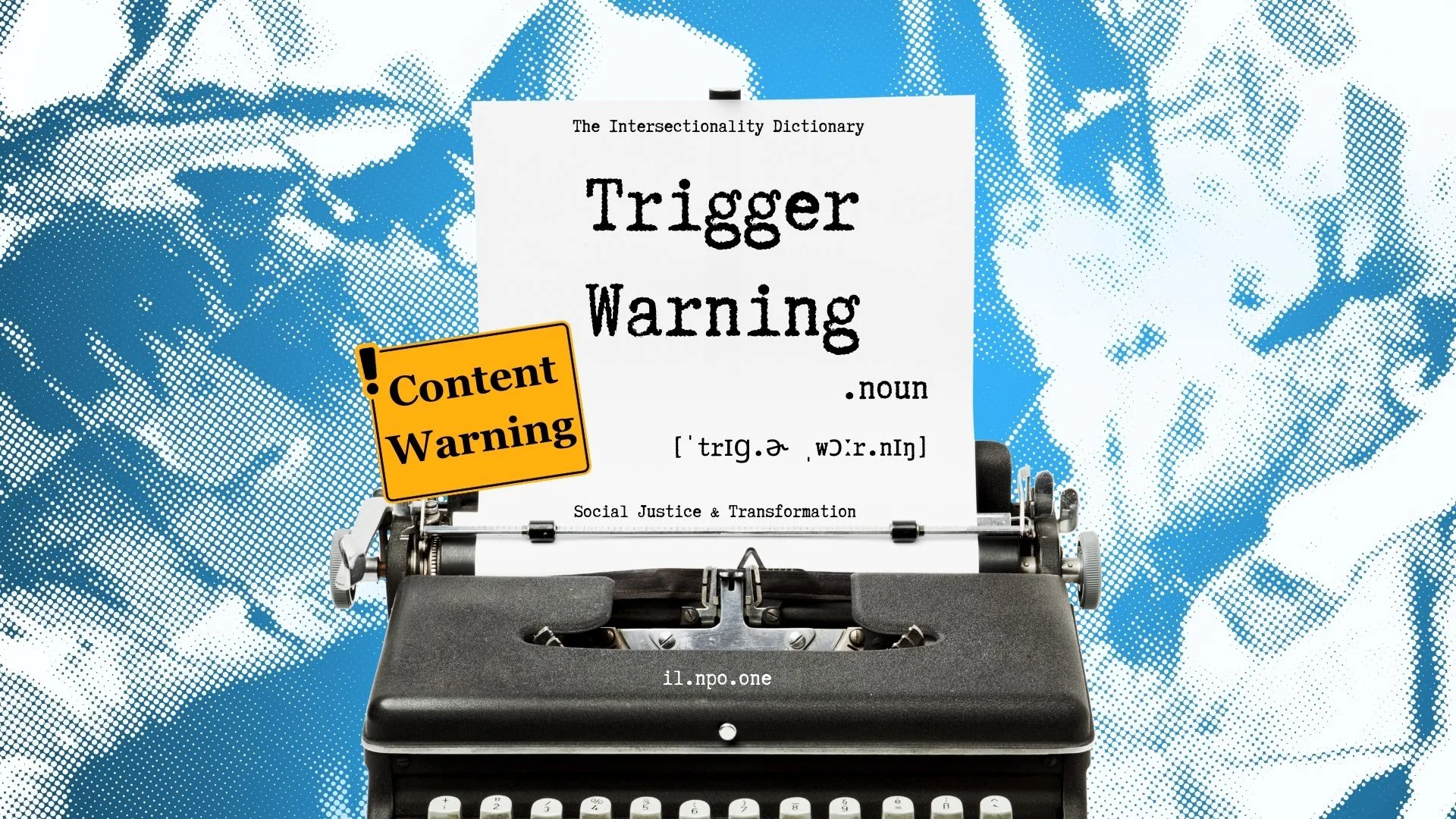
In psychological understanding, a trigger is an event, situation, or impulse that causes a chain reaction in people who have experienced traumatic events, leading to strong emotional or physical responses. The trigger recalls a traumatic event that happened in the past. A trigger warning aims to prevent these recalls (Trigger Warning – Cambridge Dictionary, n.d.). This entry does not include a detailed description of any potentially triggering material.
Framing & Perspectives
In general, trigger warnings should support people who have experienced trauma by informing them beforehand about possible triggers in what they are about to consume, for example, in movies, podcasts, trailers, presentations, books, etc. This helps prevent re-experiencing the trauma and mental health symptoms that hinder participation in daily life. It gives people the chance to avoid certain content or react before the trigger might limit their ability to engage (Healthline, 2019).
The more casual use of trigger warnings is usually for a good reason but can sometimes have an unintended negative impact on people who are struggling with trauma. Furthermore, it can be difficult to communicate them to others. If one has experienced trauma and has triggers, the debate about it and the use of trigger warnings can already cause distress. The concept of such a warning comes from PTSD research (Bellet, Jones, & McNally, 2018).
However, not everyone agrees with this approach. Effects on people without traumatic experiences are discussed. While many experts believe that trigger warnings allow people who have experienced trauma to decide whether to watch or read something, others believe that they are potentially harmful to people who have not experienced trauma (Healthline, 2019).
Relevance
The adoption of trigger warnings aims to create a safer environment for people who have experienced trauma. Given the possible advantages and disadvantages, it is essential to handle trigger warnings sensitively and an understanding of their impact on people with traumatic experiences as well as those without. The ongoing conversation points out the need for more trauma-informed awareness and knowledge about possible impacts.
Keywords: Trigger, Consent, Chain Reaction, Traumatic Events, Emotional Response, Physical Response, Safe Space
Connected Terms: Trigger
References
Bellet, B. W., Jones, P. J., & McNally, R. J. (2018). Trigger warning: Empirical evidence ahead. Journal of Behavior Therapy and Experimental Psychiatry, 61, 134-141. https://doi.org/10.1016/j.jbtep.2018.07.002
What really means to be triggered – Healthline. Retrieved January 10, 2023, from https://www.healthline.com/health/triggered#trigger-warning-debateTrigger Warning – Cambridge Dictionary. Retrieved January 10, 2023, from https://dictionary.cambridge.org/dictionary/english/trigger-warning