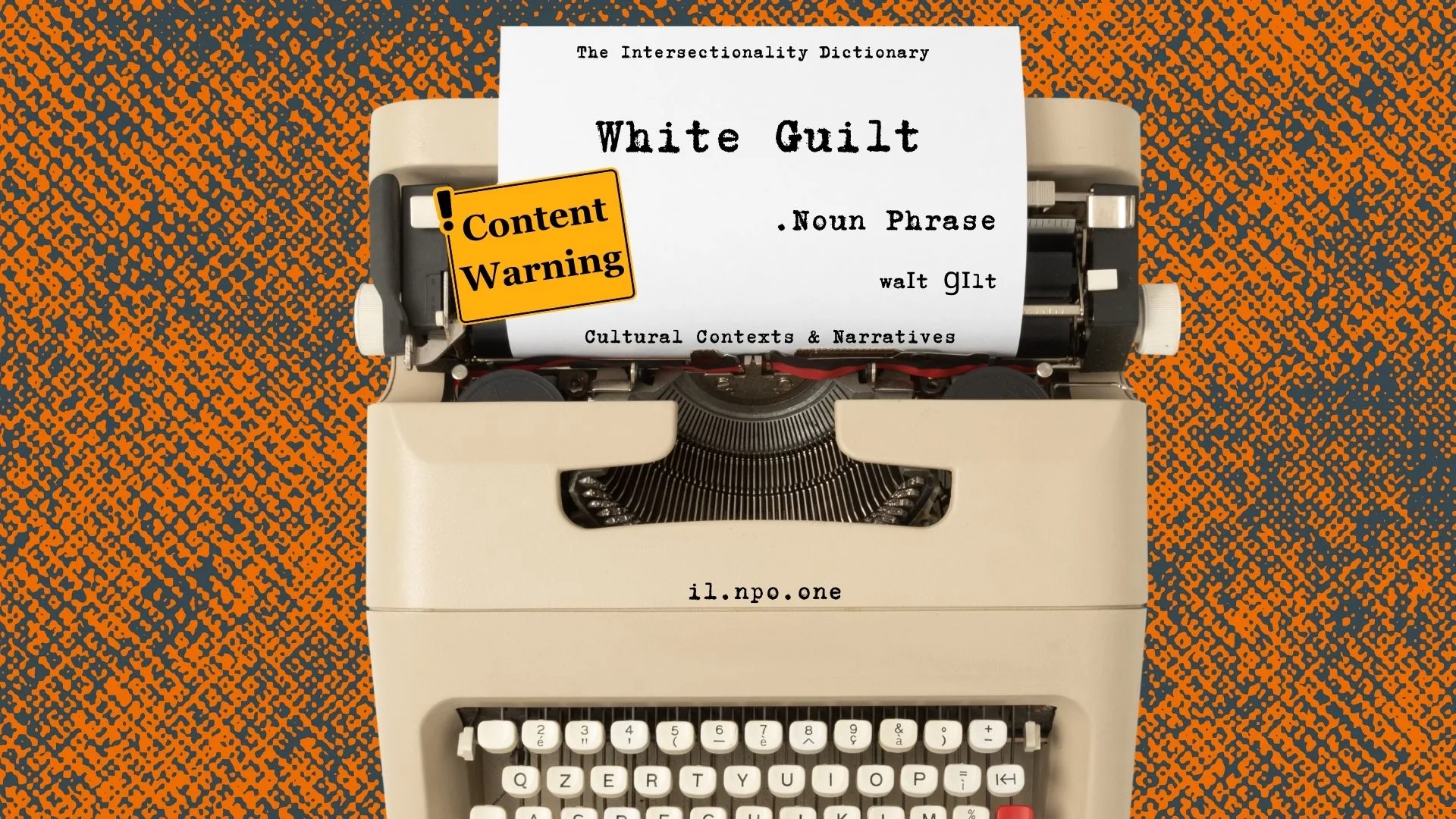
White guilt is a term used to describe the sentiments of guilt, shame, or discomfort that White individuals likely feel as a result of past and present racial injustices, particularly those that target people of color (Swim & Miller, 1999). Feelings of White guilt can lead to discomfort, which often triggers different reactions, such as defensiveness, inaction, or performative activism of White individuals or groups. However, feelings of White guilt can lead to stronger support for policies like affirmative action (Klandermans et al., 2008) and more willingness to take action in support of historically marginalized groups (Mallett, Huntsinger, Sinclair, & Swim, 2008). The following text contains examples of racial inequalities and systemic racism from the perspective of White individuals engaging in performative anti-racist actions that reinforce harmful narratives and the rejection of privilege.
Framing & Perspectives
The public discourse surrounding White guilt is highly polarized. According to some debates, it is a necessary first step in acknowledging systematic injustice, which can strengthen public support for diversity initiatives, encourage allyship, and support laws like affirmative action (Klandermans, Werner, & Doorn, 2008). Opposingly, critics see White guilt as an unproductive or manipulative force (Spanierman, 2022). According to another line of criticism, feelings of White guilt are deliberately instilled in individuals to advance progressive causes, particularly regarding immigration policies. BIPOC individuals and White allies often get accused of using White guilt as a manipulation to promote their agendas. Supporters of this view claim that people should not feel guilty for actions they did not personally commit, often denying their own privileges and rejecting the concept of systemic racism (Spanierman, 2022).
Relevance
Despite criticism, White guilt can also lead to positive outcomes. White people who experience stronger feelings of guilt about racial injustice are often more aware of White privilege, more likely to recognize ongoing discrimination against Black individuals, and tend to hold fewer prejudiced views (Swim & Miller, 1999). Feelings of White guilt can lead to stronger support for policies like affirmative action (Klandermans et al., 2008) and more willingness to take action in support of historically marginalized groups (Mallett, Huntsinger, Sinclair, & Swim, 2008).
White guilt also plays a role in professional settings. For example, in mental health care, trainees with higher levels of White guilt demonstrate greater cultural competence, considering the impact of race and systemic inequalities on their clients’ experiences rather than solely focusing on individual psychological factors (Spanierman, Neville, Liao, Hammer, & Wang, 2008).
However, some critics argue that White guilt is merely a fleeting emotion that does not necessarily translate into meaningful action. It can lead to performative allyship—such as superficial social media activism (Kutlaca & Radke, 2023), diversity consumerism (Scarritt, 2019), NGOs that promote diversity without addressing the underlying workplace practices that uphold racism and perpetuate discrimination and power hierarchies (Parveen, 2021), or volunteer tourism that may unintentionally promote paternalistic dynamics. In the case of such “White saviorism”, members of privileged societal groups are trying to help, such as in volunteer tourism, and subconsciously act from a perception of seeing historically marginalized communities as inferior. This illustrates how White guilt can function within neo-colonial power structures, creating dependency rather than true empowerment or systemic change. Additionally, such actions can unintentionally reinforce perceptions of White and/or Western superiority while claiming to be anti-racist (Waddingham, 2021). Such examples of performative allyship often fail to promote sustained involvement in initiatives that lead to long-term structural changes (Spanierman, 2022; Kutlaca & Radke, 2023). Feelings of White guilt can lead to discomfort, which often triggers different reactions, such as defensiveness, inaction, or performative activism. Although this discomfort is challenging, it is an essential starting point for growth. As a White person, to take accountability, challenge one’s own privilege, and commit to active learning about past and present social injustices are crucial steps towards decolonizing the mind, relationships, and social institutions.
BIPOC* – Black, Indigenous, People of Colour
Keywords: Affirmative Action, White Supremacy, Collective Guilt, Collective Wrongdoings Towards Minorities, Racial Inequality, Systemic Racism, White Privilege
Connected terms: Microaggressions, Microinterventions, Ethnocentrism, Racialized Beauty Standards, Representation, White Defensiveness, White Fragility, Whitewashing, White Silence
References
Grzanka, P. R., Frantell, K. A., & Fassinger, R. E. (2020). The White Racial Affect Scale (WRAS): A measure of White guilt, shame, and negation. The Counseling Psychologist, 48(1), 47-77.
Klandermans, B., Werner, M., & Van Doorn, M. (2008). Redeeming apartheid’s legacy: Collective guilt, political ideology, and compensation. Political Psychology, 29(3), 331-349.
Kutlaca, M., & Radke, H. R. (2023). Towards an understanding of performative allyship: Definition, antecedents and consequences. Social and Personality Psychology Compass, 17(2), e12724.
Mallett, R. K., Huntsinger, J. R., Sinclair, S., & Swim, J. K. (2008). Seeing through their eyes: When majority group members take collective action on behalf of an outgroup. Group Processes & Intergroup Relations, 11(4), 451-470.
Parveen, N. (2021, April 20). Amnesty International has culture of white privilege, report finds. The Guardian. From https://www.theguardian.com/world/2021/apr/20/amnesty-international-has-culture-of-white-privilege-report-finds
Scarritt, A. (2019). Selling diversity, promoting racism: How universities pushing a consumerist form of diversity empowers oppression. Journal for Critical Education Policy Studies (JCEPS), 17(1).
Spanierman, L. B. (2022). White guilt in the summer of Black Lives Matter. In K. von Kellenbach & M. Buschmeier (Eds.), Guilt: A force of cultural transformation (pp. 41–58). Oxford University Press.
Spanierman, L. B., Neville, H. A., Liao, H. Y., Hammer, J. H., & Wang, Y. F. (2008). Participation in formal and informal campus diversity experiences: Effects on students’ racial democratic beliefs. Journal of Diversity in Higher Education, 1(2), 108.
Swim, J. K., & Miller, D. L. (1999). White guilt: Its antecedents and consequences for attitudes toward affirmative action. Personality and Social Psychology Bulletin, 25(4), 500-514.
Waddingham, W. (2021, March 10). Why We Need To Uncover White Savior Logic Of Volunteer Tourism. The Yale Review Of International Studies. From https://yris.yira.org/column/why-we-need-to-uncover-white-saviour-logics-in-volunteer-tourism/