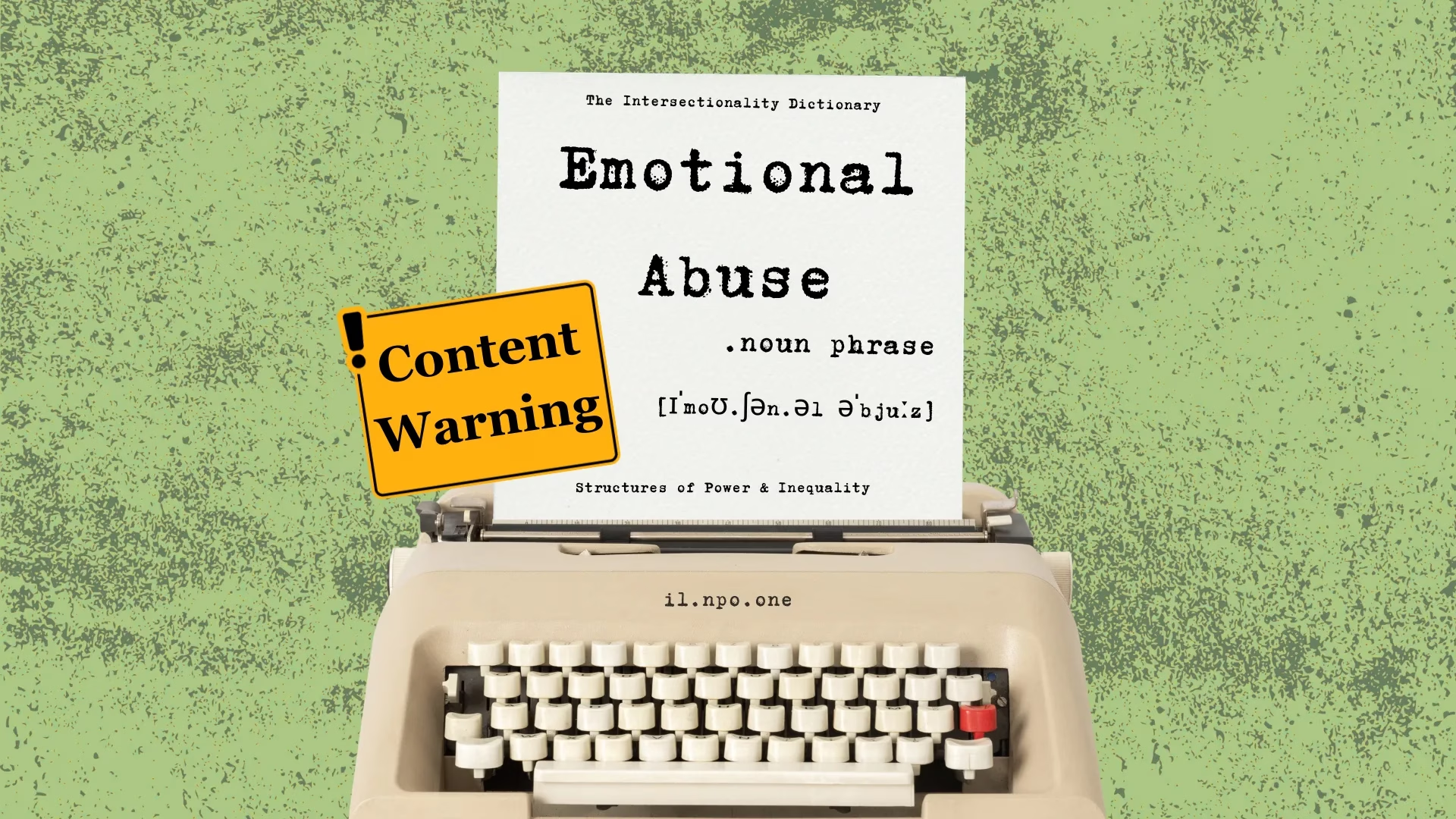
Emotional abuse is a type of psychological violence that entails actions that are meant to hurt, control, or scare the targeted individual (National Domestic Violence Hotline, 2025). Compared to other forms of violence, emotional abuse can be harder to recognize as dangerous since it is usually quieter and more subtle. Often, it begins with words or actions that seem harmless, but then evolve into more harmful forms of manipulation over time (Roa, 2023). The following text will have general examples of actions that are emotionally abusive.
Framing & Perspectives
Emotional abuse can impact anyone regardless of age, gender, sexual orientation, cultural background, disability, or socioeconomic status (Villines, 2023). It is less likely for people, women especially, in emotionally abusive situations to leave or see the abuse for what it is. Therefore, targeted individuals are more likely to stay and comply with the abusers’ demands. The control one gains over a person by using emotional abuse is perhaps one reason why abusers deploy it. Emotional abuse can happen in any relationship, although it is most common among family members or romantic partners, regardless of sexual orientation (Mental Health America, 2023).
Emotional abuse can be covert and subtle or overt and blatant (Marshall, 1999). In covert emotional abuse cases, the abusers often use manipulation, sarcasm, or rude words to make their victims feel bad about themselves and to hurt their confidence. Overt abuse includes actions that are clearly meant to insult, degrade, or humiliate someone, such as abusive speech, gaslighting, or controlling behavior. Both types of abuse aim to harm the victim’s mental and emotional health. Emotional abuse often happens before physical abuse because there is a strong link between the two forms occurring in domestic violence (Gondolf et al., 2002).
Abusers mainly hurt or threaten those who are close to them (Stark, 2023). Emotional abuse, whether it’s overt or covert, can make victims feel helpless, hurt, angry, worthless, or afraid. To stay in control, emotional abusers often make their victims feel alone by manipulating their surroundings and relationships. When emotional abuse goes on for a long time, it can cause serious mental health problems like depression or anxiety.
Relevance
Covert emotional abuse can sometimes be more harmful than physical or verbal abuse (Marshall, 1999). Emotional abuse can harm the victim’s sense of self and make them less able to trust their own judgment, lower their self-esteem, their sense of identity, and might make them more likely to blame themselves, lose their confidence, and cause severe sadness and suicidality. Individuals most at risk of experiencing emotional abuse are women in intimate relationships, women under 30 years old, disabled women, people seeking refugee or asylum status, and non-heterosexual individuals (EIGE, 2022).
After experiencing emotional abuse for a long time in intimate relationships, it is often difficult to see a way forward (Dolan & Lieway, 2025). A first step to support victims can be to help them recognize their partner’s behavior as emotional abuse. Trusted friends and family can provide emotional support, offering safer spaces, help with finding resources, or help in creating an exit plan (Keohan, 2025). After leaving, contact with the abuser should be limited, if possible, and emotional and legal boundaries should be set. Lastly, healing from emotional abuse does take time. In some cases, therapy can help by giving necessary tools to process traumatic experiences, rebuild self-esteem, and find hope for the future.
Keywords: Abuse, Psychological Abuse, Covert Abuse, Abusive Relationships, Self-Esteem, Depression, Anxiety, Trauma
Connected terms: Microaggressions, Victim Blaming, Victimization, Body Liberation, Trigger, Gender-Based Violence, “Toxic” Masculinity
References
Dolan, F. (2025). “they’re not abusive, just controlling:” recognizing the subtle signs of emotional abuse. Risk Intervention & Safety Education. https://www.depts.ttu.edu/rise/Blog/subtlesignsofemotionalabuse.php
EIGE. (2022). Combating coercive control and psychological violence against women in the EU member states. Publications Office of the European Union.
Gondolf, E. W., Heckert, D. A., & Kimmel, C. M. (2002). Nonphysical abuse among Batterer Program participants. Journal of Family Violence, 17(4), 293–314. https://doi.org/10.1023/a:1020304715511
Keohan, E. (2025, January 17). How to get out of an emotionally abusive relationship. Talkspace. https://www.talkspace.com/blog/how-to-leave-an-emotionally-abusive-relationship/
Marshall, L. L. (1999). Effects of men’s subtle and overt psychological abuse on low-income women. Violence and Victims, 14(1), 69–88. https://doi.org/10.1891/0886-6708.14.1.69
Mental Health America. (2023, June 26). Experiencing abuse in an LGBTQ+ relationship. https://screening.mhanational.org/content/experiencing-abuse-lgbtq-relationship/?ref=96%3E
National Domestic Violence Hotline. (2025, March 14). What is emotional abuse. The Hotline. https://www.thehotline.org/resources/what-is-emotional-abuse/
Roa, A. S. (2023, September 12). Emotional abuse: UNMASKING THE INVISIBLE SCARS. Human Options. https://humanoptions.org/emotional-abuse-unmasking-the-invisible-scars/
Stark, S. W. (2023). Emotional abuse. EBSCO. https://www.ebsco.com/research-starters/health-and-medicine/emotional-abuseVillines, Z. (2023, November 9). The cycle of emotional abuse. The cycle of emotional abuse – by Zawn Villines. https://zawn.substack.com/p/the-cycle-of-emotional-abuse